
Lake care · 7-minute read
Leave Utah Lake better than you found it
Carry one small trash bag. Pack out every scrap you brought. Then give the shoreline five quiet minutes before you head home.
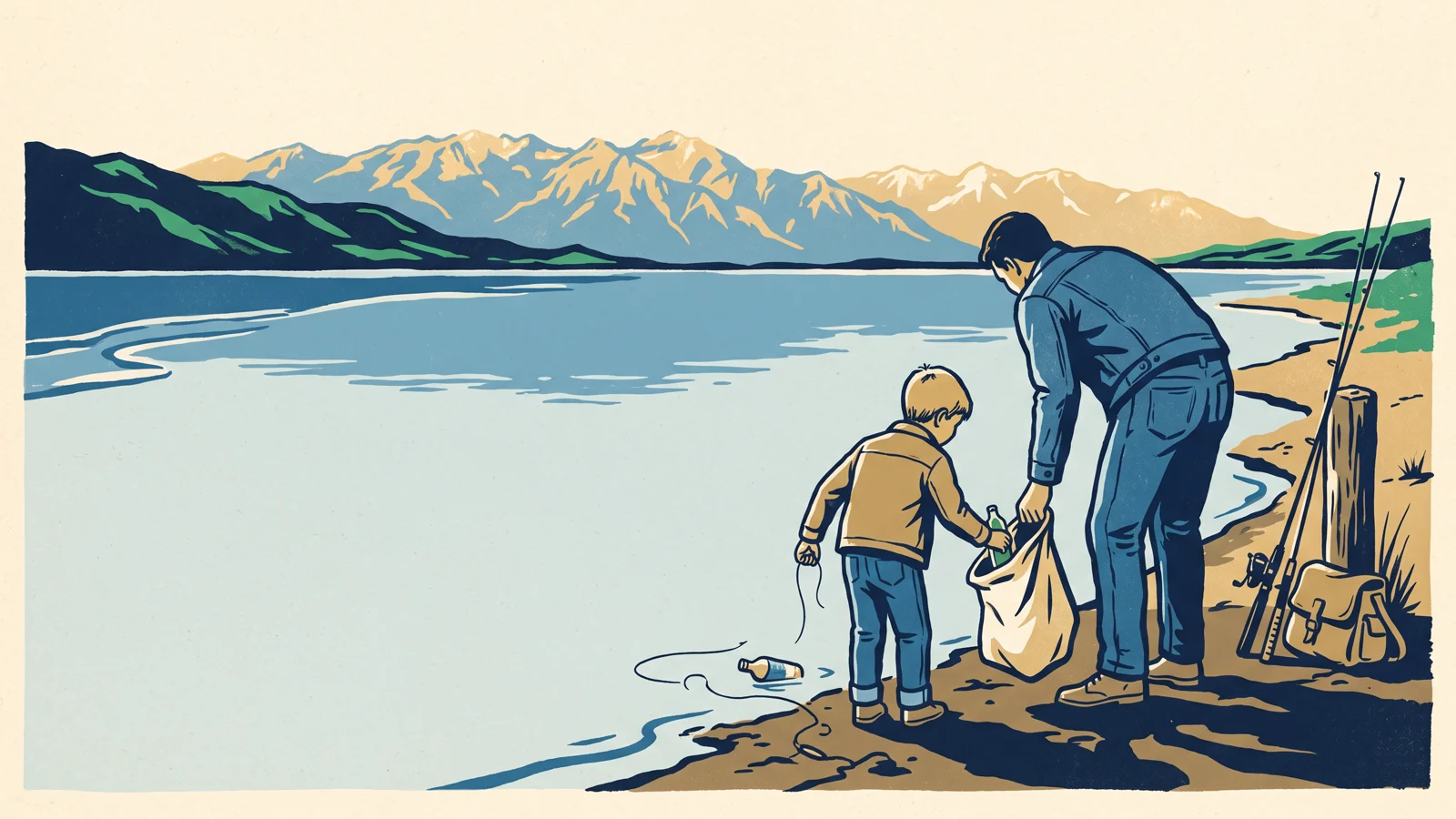
The simplest Utah Lake cleanup plan is the one you will actually do: carry a bag, pack out your own waste, and walk from the waterline back to your vehicle before leaving. Pick up loose fishing line first, keep hooks in a hard container, and leave hazardous items for park staff. That short walk changes what the next family finds.
Most of us come to Utah Lake asking for something: a quiet hour before work, a child's first bobber drop, or a place to stand beside someone we are trying to know better. The lake gives us those moments without keeping score. Cleaning up is a plain way to say thank you.
Take five minutes before you turn the key
Utah State Parks asks visitors to use proper garbage facilities when they are available and to pack out what they bring when they are not. A repeatable end-of-trip sweep makes that advice easier to keep, even when the wind comes up or everyone is tired.
- Stow hooks and lures first. Put sharp tackle back into a closed box before anyone starts picking up.
- Begin at the waterline. Look for line, soft-plastic bait, bait lids, bottle caps, and food wrappers caught in reeds or rocks.
- Follow your path out. Sweep the pier, bank, picnic area, and parking spot you used.
- Take one thing that was not yours. One bottle or handful of line is enough to leave a visible difference.
- Secure the bag. Use a closed park bin or carry it home so wind cannot undo the work.
Fishing line is small. Its damage is not.
Lost line can wrap around birds and other wildlife, and hooks can injure people, pets, and animals long after an angler has gone home. NOAA's debris guidance recommends disposing of or recycling recreational fishing gear properly and cutting loops before they enter the trash.
Keep a small zip bag or line spool in your tackle kit. Wind discarded line around it as you fish. If a marked monofilament recycling tube is available, follow its instructions. If not, cut every loop, seal the pieces in a bag, and place them in secure household trash. Used hooks belong in a small puncture-resistant container—not loose in the cleanup bag.
Pick up what you can handle safely
Gloves and a simple trash grabber make ordinary cleanup safer. Do not handle needles, broken glass hidden in mud, leaking containers, unknown chemicals, dead animals, or anything that looks dangerous. Keep children and pets back, note the location, and tell park staff or the agency that manages the access point.
Stay on established access paths and firm shoreline while you work. A cleanup should not become a reason to trample nesting cover, enter closed areas, or wade into unsafe water.
Clean water starts before the shoreline
Litter is not the only thing that reaches a lake. Utah's Department of Environmental Quality notes that stormwater can carry oil, gasoline, pet waste, fertilizer, sediment, and debris straight into local rivers and lakes. At home and at the ramp, keep fuel, soap, fish waste, and loose trash out of gutters and storm drains.
At the lake, use restrooms and fish-cleaning facilities where provided. Do not rinse bait containers, greasy pans, or cleaning chemicals into the water. Small choices upstream still arrive somewhere downstream.
Make it part of the family story
Children remember what adults repeat. Hand them a glove, give them a clear safe area, and make the last five minutes part of the trip instead of a lecture at the end. Count the bottle caps. See who finds the first piece of line. Thank them for taking care of a place they will want to return to.
A child who learns that fishing includes caring for the bank grows into an angler who notices what other people walk past. That may matter to Utah's waterways more than any single cleanup day.
Ready to take care of one shoreline?
The Utah Lake Authority's Adopt-a-Shoreline program works with individuals, families, clubs, businesses, and other groups. It coordinates public access points, provides gloves and trash bags, and helps arrange drop-off for collected litter. The program asks adopters to return through the season, turning one generous afternoon into steady care.
Our small promise to Utah Lake
Leave one pocket empty in your tackle bag and five minutes open in your plan. Bring home your own mess. Bring home one thing that was not yours. A lake does not stay loved because people say they love it. It stays loved because somebody bends down.
Find a shoreline to care forOfficial guidance used for this page
Utah Lake cleanup questions
What should anglers pick up first at Utah Lake?
How should I dispose of old fishing line?
Should I pick up needles, chemicals, or other hazardous trash?
How can I volunteer for a Utah Lake shoreline cleanup?
Keep planning with care
One useful email each week
Get the Utah Lake fishing update
Source-checked conditions, practical trip planning, and new Utah Lake guides in one concise digest.
Unsubscribe any time. Your address is used only for Utah fishing updates.