
Utah Lake Family Fishing Guide
Keep the first trip simple: easy access, small hooks, short sessions, and fish kids can actually catch.
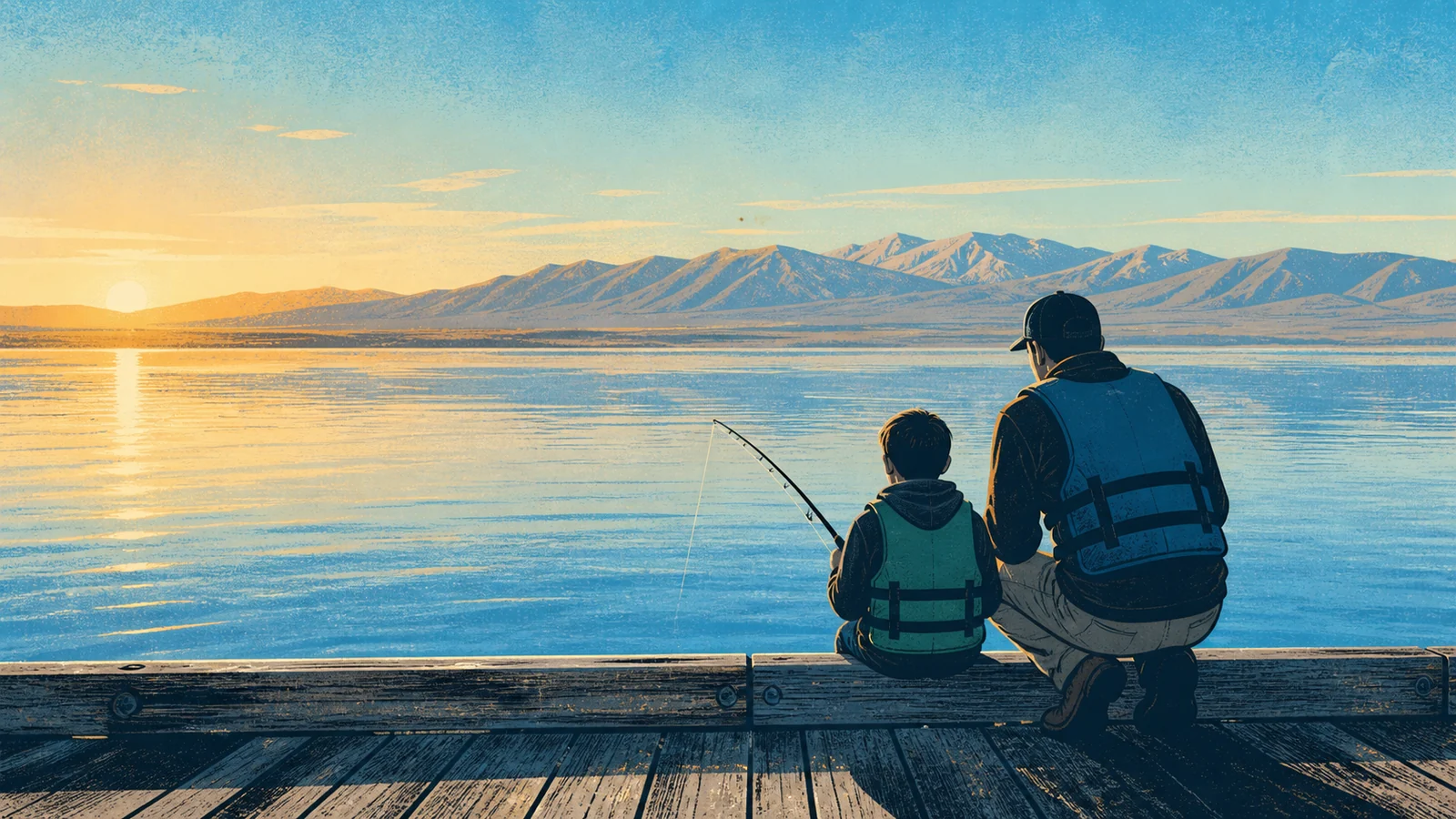
Family Fishing at Utah Lake
Utah Lake works for family fishing when the plan stays realistic: short session, easy access, small baits, and a place where kids can move around without turning the trip into a safety problem. You do not need a boat or a complicated tackle system. You need a defined stopping point, a backup plan for wind, and fish that will bite simple presentations.
The biggest mistake parents make here is planning for the "best" adult bite instead of the easiest kid-friendly trip. Utah Lake is broad, shallow, and exposed. Wind, mud, and warm-weather water quality are part of the planning job. If you handle those first, the fishing side gets much easier.
Best Family Starts
| Access | Best fit | Why families use it | Realistic targets | What to verify first |
|---|---|---|---|---|
| Utah Lake State Park pier | First trip, younger kids, grandparents, short visits | Defined platform, nearby restrooms, parking, easy reset if attention spans fade | Bluegill, channel catfish, carp, passing white bass | State park hours, day-use fee, algae status, and wind forecast |
| American Fork Harbor | Protected-water backup plan | Harbor structure gives families a calmer option when the open lake gets rough | Bluegill, catfish, carp, seasonal white bass | Public access route and shoreline footing |
| Provo Boat Harbor | Older kids who can cast or families mixing sightseeing with fishing | Harbor walls and moving-water zones can produce white bass and catfish without a boat | White bass, catfish, carp, occasional panfish | Boat traffic, personal-space limits, and whether kids can stay out of launch lanes |
| Lincoln Beach | Self-contained evening plan | More room and less crowding when conditions are stable | Catfish, carp, some white bass | Water level, mud, shoreline firmness, and whether your group can handle primitive access |
Pick the Right Trip for Your Kids
| If your group looks like this | Best trip length | Best setup | Avoid this mistake |
|---|---|---|---|
| Young kids who just want action | 45 to 90 minutes | Bobber and worm near pier posts or calm harbor edges | Long casting lessons before they have caught one fish |
| Kids who can cast but lose focus fast | 90 minutes to 2 hours | One active jig rod plus one soaking catfish rod | Making everyone fish the same technique |
| Teens who want a stronger fish | Evening session | Rod holder, baited bottom rig, landing net | Showing up after dark with no light or net plan |
| Mixed ages and grandparents | Short morning trip | State park pier with chairs, shade, wipes, and simple tackle | Choosing primitive shoreline just to save a fee |
What Kids Can Realistically Catch
Bluegill
Bluegill are still the best first fish. Use a tiny hook, a small split shot, and a bobber with a worm piece. Stay close to structure instead of bombing long casts into open water. If the bobber keeps twitching without disappearing, downsize the bait again.
Channel Catfish
Catfish are the easiest "big fish" option for families, especially in summer evenings. Let an adult cast, set the rod in a holder, and hand the rod off once it loads up. That keeps hooks and sinkers under control while kids still get the fun part.
White Bass
White bass are the exciting bonus species for spring and early-summer moving-water windows. They are better for kids who can cast and retrieve. Bring cheap jig heads because harbor rocks and shoreline structure eat tackle.
Carp
Carp make sense when the goal is simply to bend a rod. They are common, strong, and available from shore. They are less tidy than a bluegill trip, but older kids usually remember the power.
One-Hour First-Trip Plan
- Choose the state park pier unless wind or budget pushes you to a protected harbor.
- Rig one bobber rod for bluegill and one bottom rod for catfish.
- Fish the closest useful water first: pier posts, wall edges, and calm corners.
- Let the child reel every fish while an adult handles baiting, casting, and unhooking.
- Take the photo early instead of waiting for a bigger fish that may never come.
- Leave while everyone still likes fishing.
Family Gear Checklist
- Small hooks and pre-tied bobber rigs: Faster resets when the first tangle happens.
- Needle-nose pliers: Important for catfish and fast bluegill unhooking.
- Small net: Pier edges and harbor walls punish families who try to swing fish.
- Hand wipes and paper towels: Utah Lake trips get messy fast.
- More drinks than you think you need: The lake is exposed and warm.
- Shade gear: Hats, sunscreen, light sleeves, and a simple umbrella if you stay longer.
- Trash bag: Pack out line, bait tubs, snack wrappers, and fish scraps.
Two Family Trip Templates
State Park Morning Plan
When checked on June 13, 2026, the Utah Lake State Park pages listed 6 a.m. to 10 p.m. hours during the main season, a $20 vehicle day-use fee, clear algae status, and 62°F water with the lake 78.59% full. That makes the park the cleanest "show up and fish" option for a family morning. Get there near opening, fish two hours or less, and leave before the lake or the kids get cooked.
Harbor Backup Plan
If the open-lake forecast looks sloppy, switch to a harbor and reframe the goal as simple bites instead of a trophy hunt. For parents, that wind-safe fallback is usually more useful than a longer lure list.
Licenses, Rules, and Safety Notes
- License rule: Utah DWR's 2026 guidebook says anglers under 12 do not need a license and may use two poles. Anglers 12 and older need a fishing or combination license.
- Protected fish: The 2026 guidebook says all suckers in Utah Lake must be released immediately. That matters because June sucker is a threatened native fish found in Utah Lake and the Provo River.
- Fish consumption: Utah DEQ still lists a Utah Lake fish advisory for carp and channel catfish. If your family plans to eat fish, check the advisory page before the trip and clean fish well.
- Water contact: DEQ's recreational-water-quality hub still showed its offseason monitoring note when checked on June 13, 2026, so use the live map and current advisories instead of assuming a warm-season shoreline is fine.
- HAB basics: Keep kids and pets away from scummy or paint-like water, do not let them swallow lake water, and rinse off with clean water after accidental contact.
How to Make the Trip Feel Successful
Success for a Utah Lake family trip is not a full cooler. It is a bobber going under, a fish that makes the net, a child learning to watch behind them before a cast, and a family that wants to go back. Keep the first few trips short and highly repeatable. Utah Lake is much better as a two-hour habit than as a forced all-day marathon.
Source Notes
Official sources checked June 13, 2026: Utah Lake State Park current conditions, Utah Lake State Park fees and hours, Utah DWR 2026 fishing guidebook, Utah DWR fishing hub and Fish Utah entry point, Utah DEQ recreational water quality map, and the Utah Lake fish consumption advisory. Community threads and local videos helped identify recurring reader questions about taking kids, finding easier white-bass access, and dealing with wind.
Related Resources
Current Fishing Report
See what's biting right now at Utah Lake.